



Small Group Yoga Teacher Training
Batches of 10–15 students, so teachers can observe you closely, answer your questions and give individual feedback throughout the training.
- 24-Day Residential
- Rishikesh
- 10–15 Students per Batch
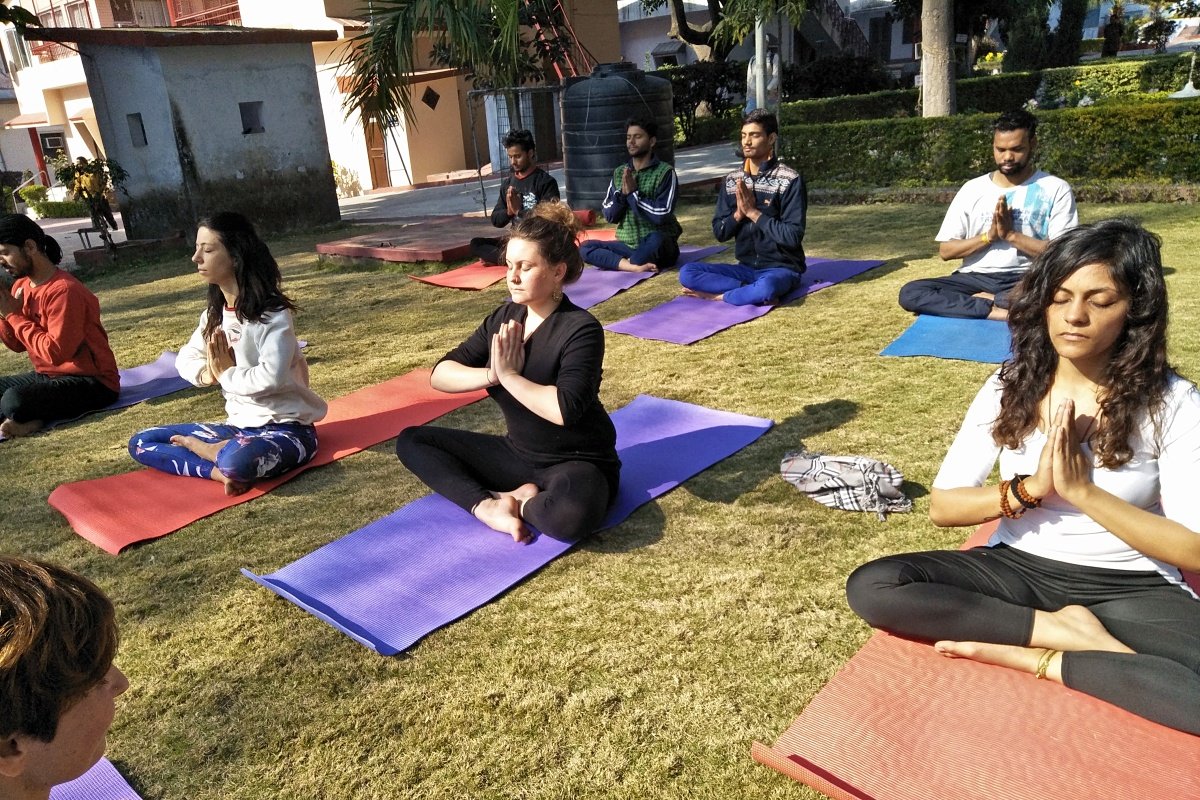
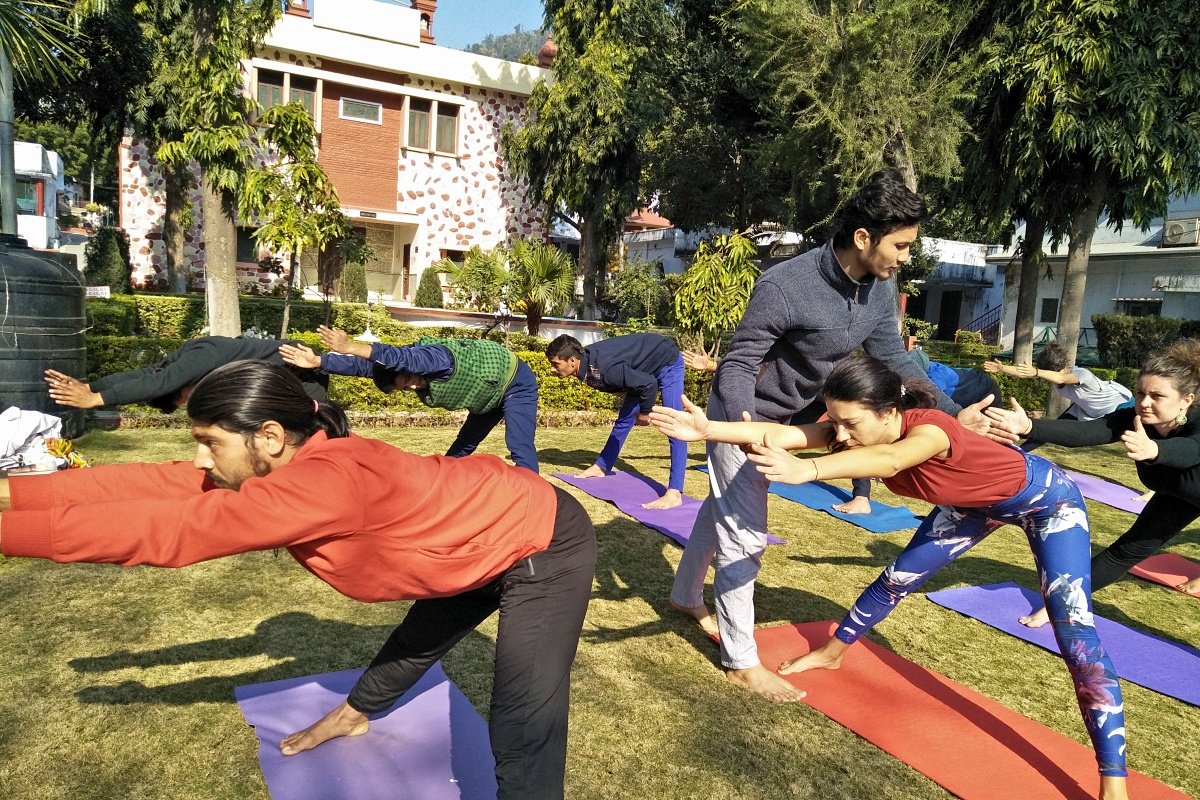
Why Does Small Group Size Matter in Yoga Teacher Training?

A yoga teacher training is not only about attending classes. Students need opportunities to practice, ask questions, receive corrections, teach their peers and understand how to adapt yoga to different practitioners. With a 10–15 student cohort, teachers have more opportunity to observe individual students and provide direct feedback throughout the training.
Fewer students create more opportunities for observation, interaction and individual guidance.
What Changes When Your Yoga TTC Has 10–15 Students?
| Learning experience | 10–15 student cohort | Large group environment |
|---|---|---|
| Teacher observation | More opportunity for individual observation | Less individual observation time |
| Questions | More opportunity for dialogue | Questions may be limited by time |
| Alignment | Individual feedback can be provided | Individual feedback may be more limited |
| Teaching practice | More opportunities to teach and receive feedback | Practice time shared among more students |
| Community | Students interact closely with their cohort | Larger social environment |
Teacher observation
- 10–15 student cohort:
- More opportunity for individual observation
- Large group environment:
- Less individual observation time
Questions
- 10–15 student cohort:
- More opportunity for dialogue
- Large group environment:
- Questions may be limited by time
Alignment
- 10–15 student cohort:
- Individual feedback can be provided
- Large group environment:
- Individual feedback may be more limited
Teaching practice
- 10–15 student cohort:
- More opportunities to teach and receive feedback
- Large group environment:
- Practice time shared among more students
Community
- 10–15 student cohort:
- Students interact closely with their cohort
- Large group environment:
- Larger social environment
What a Small Cohort Makes Possible
During Āsana Practice
Teachers can observe individual alignment and provide appropriate verbal or physical guidance.
During Prāṇāyāma
Students can ask questions about technique, breathing patterns and practice.
During Teaching Practice
Every student gets turns to teach and receive feedback as they learn to guide others.
During Philosophy & Anatomy
Smaller discussions allow students to ask questions and explore concepts in greater depth.
During Residential Life
Students interact more closely with teachers and classmates beyond formal classes.
During Meditation
Teachers can notice how each student is settling into practice and offer guidance where needed.
Learning Through the Gurukula Spirit
Traditional Indian education emphasized close teacher–student interaction, observation, practice and living close to the learning environment. A modern school cannot reproduce an ancient gurukula, but a small residential cohort keeps the essential principle: learning happens through relationship, not only through lectures.
More Than a Small Class
- You are seen — teachers have more opportunity to observe your practice.
- You are heard — you have more opportunity to ask questions and discuss what you are learning.
- You practise teaching — you don't only watch demonstrations; you teach and receive feedback.
- You receive feedback — constructive feedback helps you understand where to improve.
- You become part of a community — a smaller cohort makes it easier to build meaningful relationships.
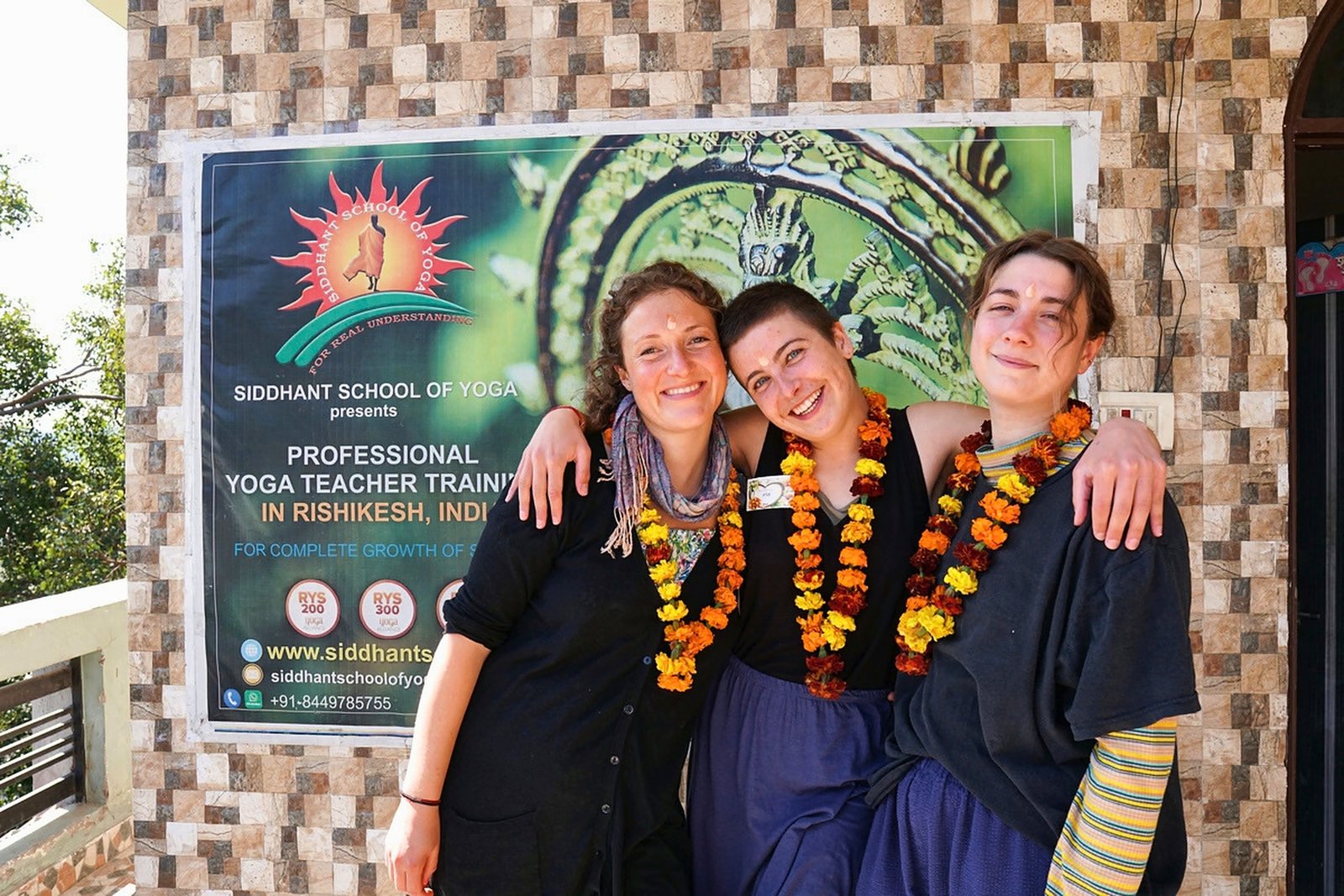
An International Learning Community
Students from different countries and backgrounds come together to study yoga in Rishikesh, sharing classes, meals and daily life at Yoga Abhyas Ashram.
Small Groups Are One Part of the Siddhant Approach
Classical Yoga
Haṭha Yoga, Aṣṭāṅga Vinyāsa, Prāṇāyāma and meditation.
Practical Learning
Alignment, adjustment and teaching methodology.
Personal Guidance
Teachers can observe individual students and provide feedback.
Residential Experience
Students live and learn together at Yoga Abhyas Ashram.
Is a Small-Group Yoga TTC Right for You?
It may suit you if you…
- Want personal guidance
- Prefer interactive classes
- Want detailed feedback on your teaching
- Are nervous about teaching for the first time
- Prefer a close residential community
- Want to understand yoga rather than memorize sequences
It may not be your priority if you…
- Prefer very large social groups
- Prefer independent learning
- Are primarily looking for the lowest-cost certification
- Want a highly flexible, non-residential experience
Frequently Asked Questions
How many students are in each batch?
10–15 students per batch.
Why does Siddhant School keep batches small?
To create more opportunity for individual observation, questions, feedback and teacher–student interaction.
Will teachers correct my yoga postures?
Teachers provide appropriate alignment guidance and corrections as part of the training.
Will I get teaching practice?
Yes. Every student teaches during the Teaching Practicum.
Is the course suitable for beginners?
Yes. The 200-Hour TTC is open to all levels; practices are introduced progressively.
How early should I book?
Seats are limited because each batch is capped at 10–15 students.
Learn yoga in a small, focused community. 10–15 students. 24 days. One immersive residential experience.
Learn → Practice → Teach → Reflect. For Real Understanding.
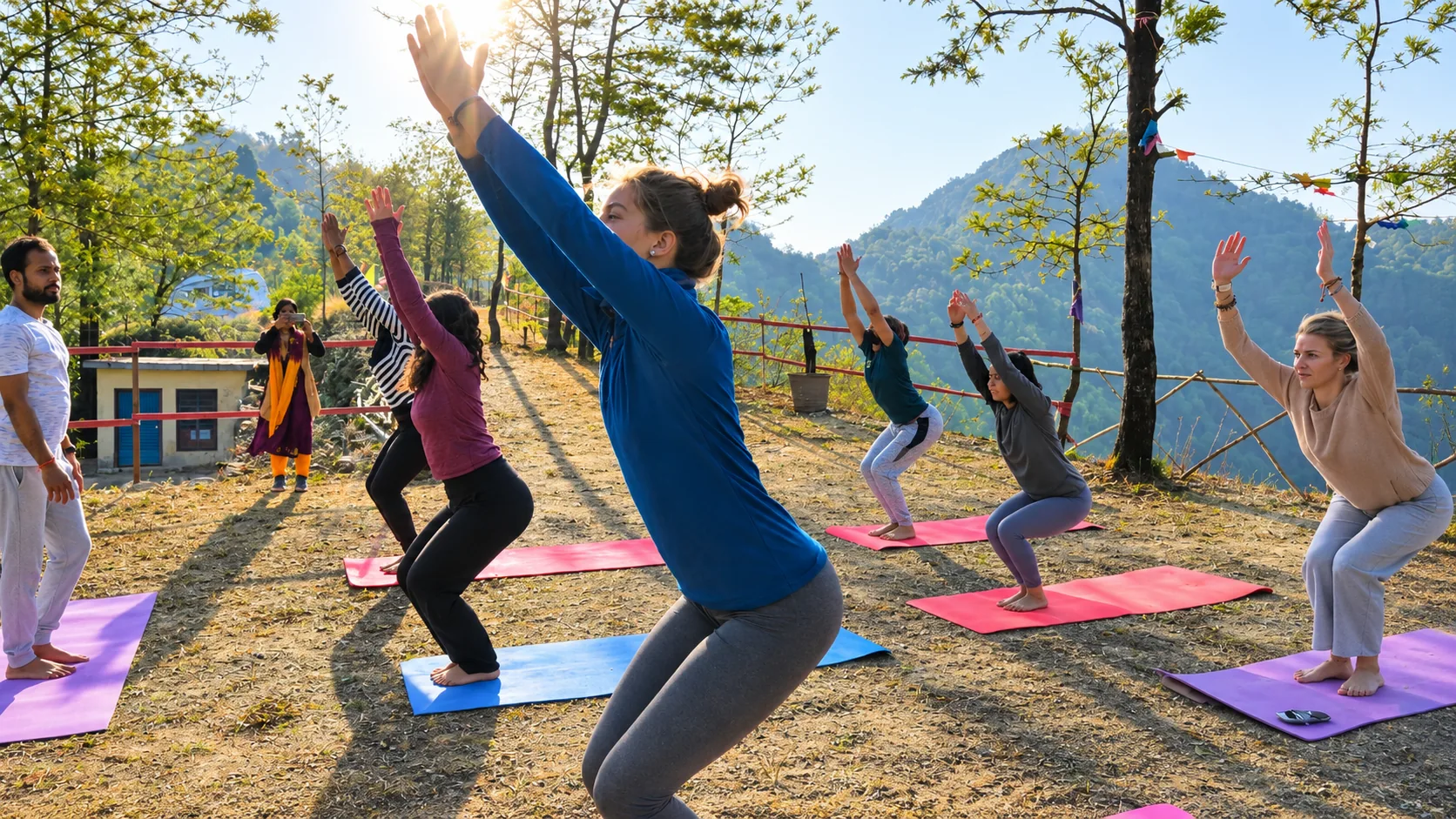
Step Onto The Mat Where Ancient Masters Walked
Upcoming residential cohorts at our Rishikesh campus are filling quickly. Connect directly with our admissions team to secure your dates and room preference.