



Professional Yoga Teaching & Personal Growth
Learn to practice with awareness, understand what you practice, communicate it clearly and gradually develop the confidence to guide others.
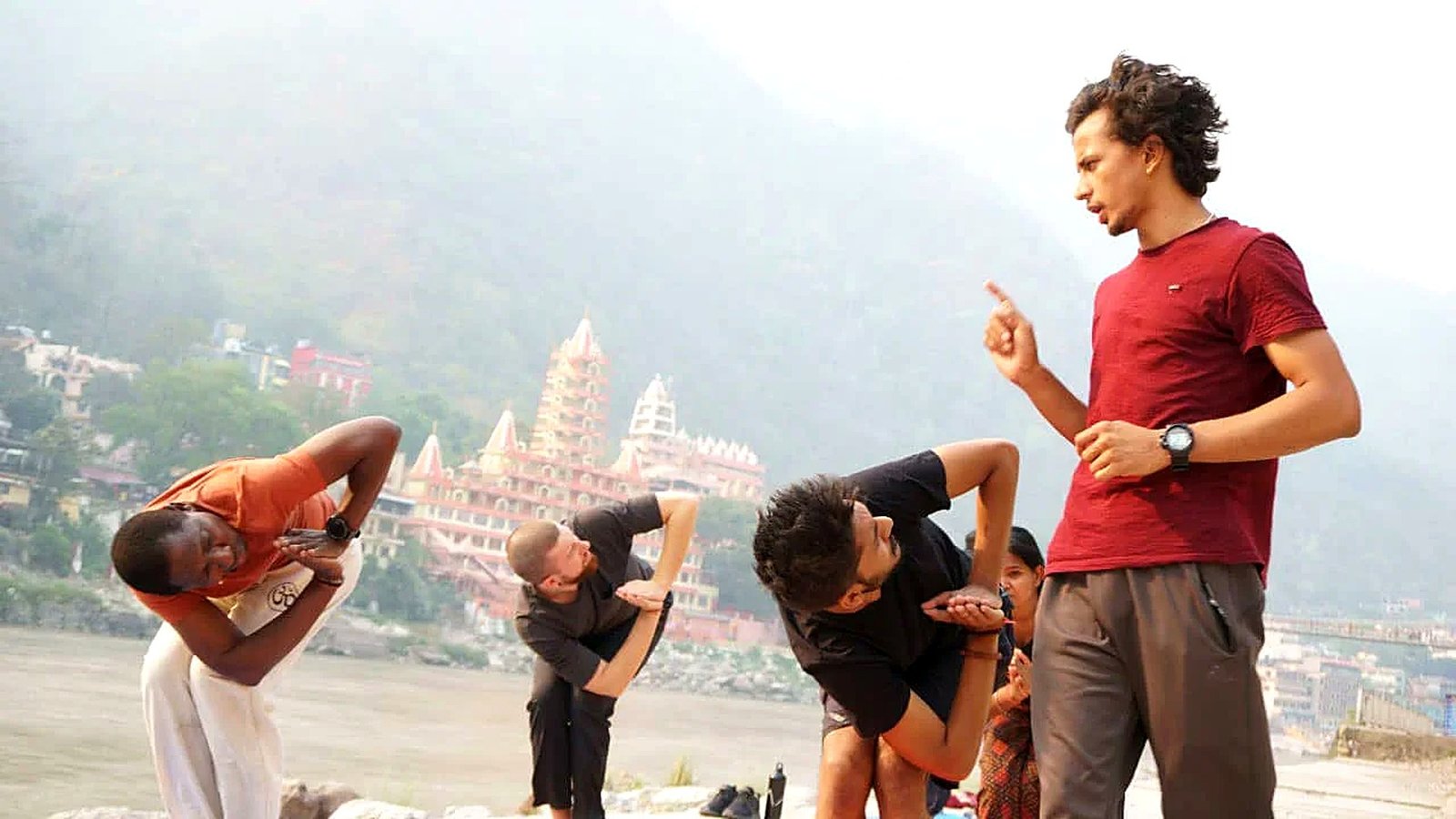
What Does a Yoga Teacher Training Develop?

A meaningful 200-Hour TTC gives students opportunities to develop personal discipline, practical teaching ability, philosophical understanding, communication skills and confidence in guiding a class.
Practice → Study → Observation → Teaching Practice → Reflection
Two Journeys. One Yoga Practice.
Personal Growth
- You learn to observe yourself
- You develop consistency in practice
- You become aware of body, breath and mind
- You meet challenges that need patience
- You reflect on yoga beyond the physical
Professional Growth
- You learn to observe others
- You learn to communicate instructions
- You understand alignment and movement
- You practise sequencing and class structure
- You gradually develop confidence to teach
Personal practice gives experience. Study gives understanding. Teaching practice develops application. Reflection keeps you growing.
4 Hallmarks of a Developing Yoga Teacher
- 01
Consistent Personal Practice
A teacher's development begins with personal practice. The objective is not perfection, but consistency.
- 02
Anatomical & Alignment Understanding
Basic functional anatomy, alignment principles, movement awareness, appropriate modifications and clear alignment instructions.
- 03
Compassionate Teacher Presence
Maitrī (friendliness) guides a respectful teacher–student relationship: guiding without unnecessary ego and communicating without intimidation.
- 04
Clear & Calm Communication
Clear verbal instructions, appropriate voice projection, pacing and class awareness — not a dramatic teaching personality.
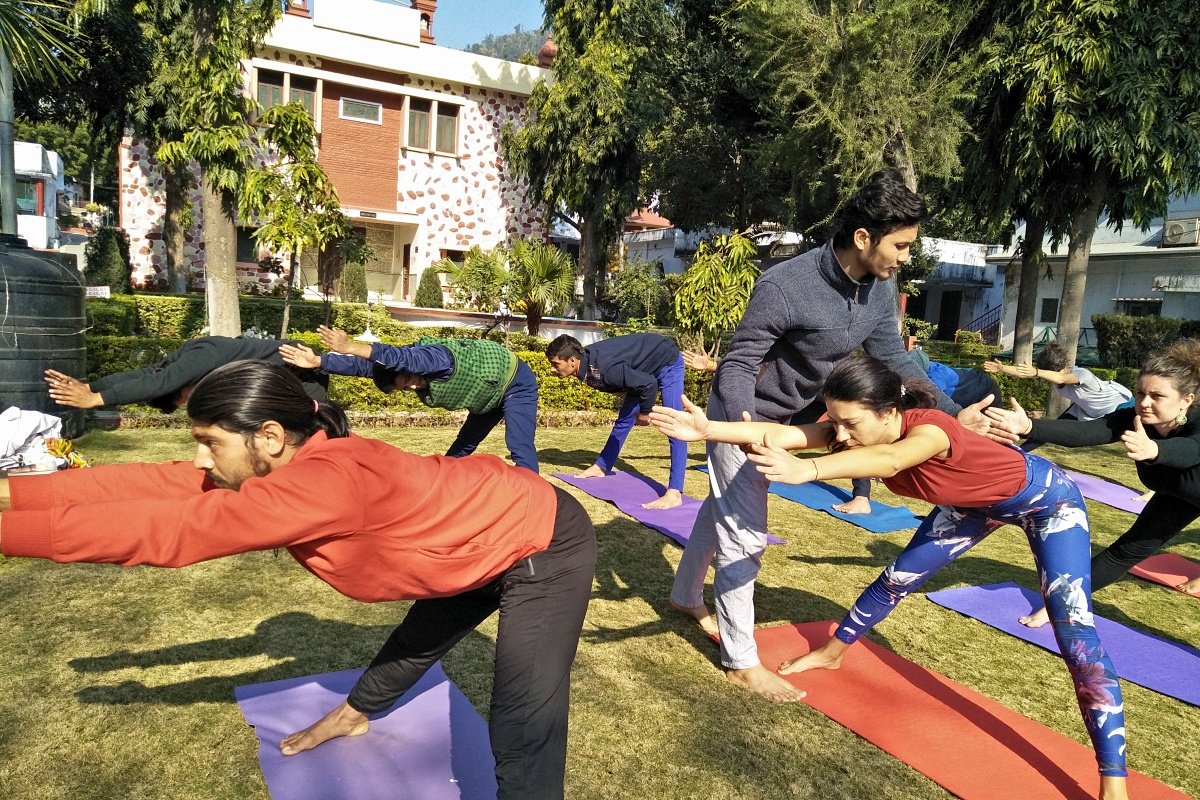
From Student to Teacher
As a practitioner you observe your own body, breath and mind. As a teacher you also observe the students in front of you, their responses, the pace of the class, transitions and whether your communication is clear.
Teaching Practicum: From Theory to Application
Students practise demonstration, instruction, sequencing, observation, adjusting their teaching when an instruction needs clarifying, and reflection.
Confidence Is Developed Through Practice
Many students begin with questions like “Can I speak in front of a group?” or “What if I make a mistake?” These are normal. Confidence develops through repetition.
Learn → Practice → Teach → Receive Feedback → Improve
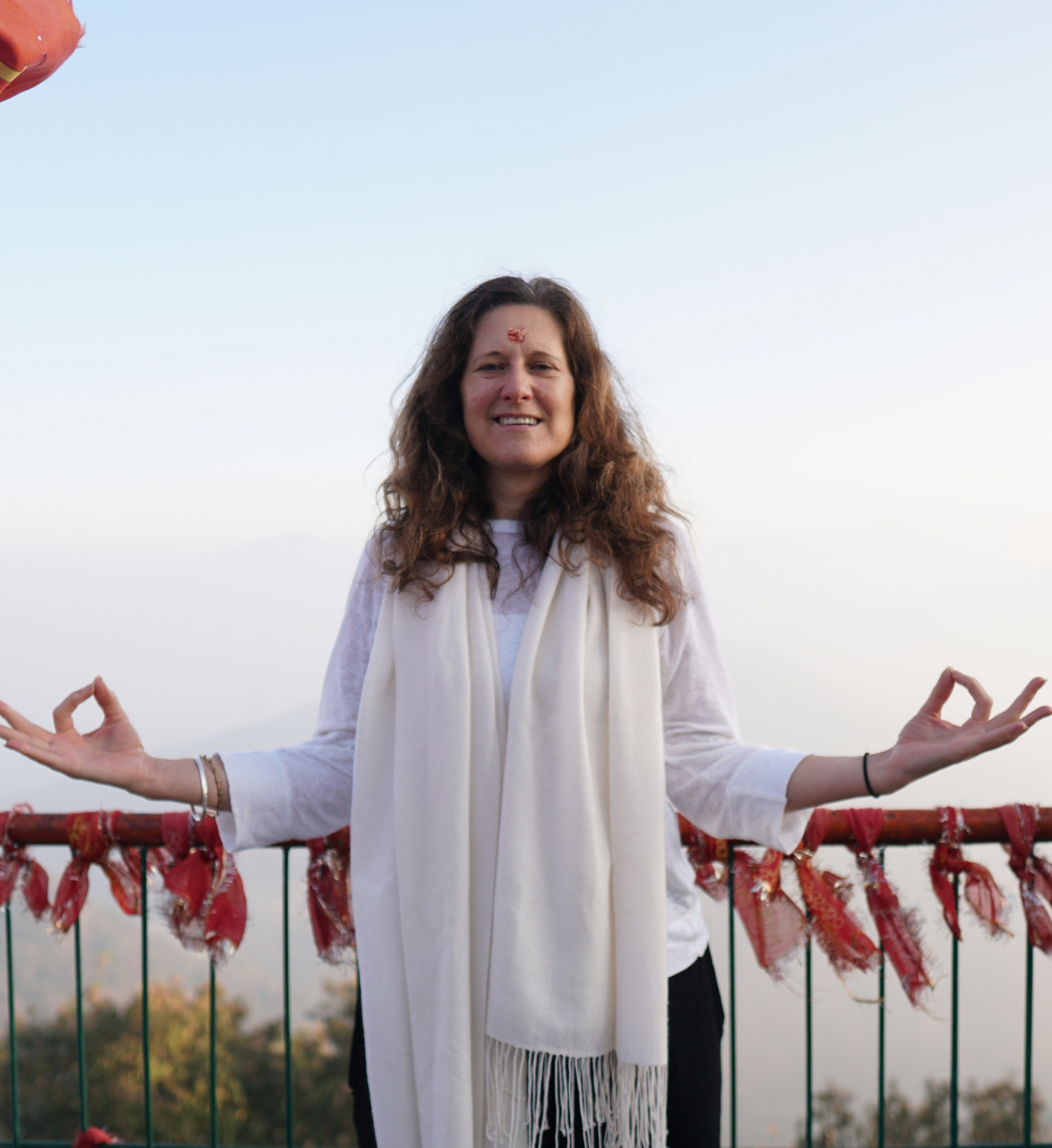
Personal Growth Beyond the Classroom
A residential TTC establishes a daily rhythm: early practice, Prāṇāyāma, meditation, study, teaching practice and reflection within an international community. Every student's experience is different; the intention is to create conditions for meaningful learning and self-observation.
Tapas — The Discipline to Practice
In the yogic tradition, Tapas is disciplined effort and commitment to practice. A teacher's development does not end with the certificate; the 200-Hour course is a foundation for continued study.
What a Developing Teacher Should Be Able to Do
By the end of a foundational training, students work toward:
- Maintaining a personal practice
- Demonstrating selected practices
- Explaining alignment principles
- Giving clear instructions and structuring a class
- Observing students and adapting instructions
- Integrating yogic concepts
- Reflecting on their teaching and continuing to learn
These are developmental goals, not guarantees.
Personal Practitioner vs. Developing Yoga Teacher
| Personal Practitioner | Developing Yoga Teacher |
|---|---|
| Focuses on personal practice | Observes both self and students |
| Experiences the practice | Learns to explain the practice |
| Follows instructions | Learns to create clear instructions |
| Works mainly with personal needs | Learns to respond to different students |
| Practices independently | Learns to create and guide a class |
Focuses on personal practice
- Developing Yoga Teacher:
- Observes both self and students
Experiences the practice
- Developing Yoga Teacher:
- Learns to explain the practice
Follows instructions
- Developing Yoga Teacher:
- Learns to create clear instructions
Works mainly with personal needs
- Developing Yoga Teacher:
- Learns to respond to different students
Practices independently
- Developing Yoga Teacher:
- Learns to create and guide a class
Professionalism in Yoga Teaching
Preparation & Punctuality
Arrive prepared and on time for every class you teach.
Respectful Communication
Speak clearly and kindly, with appropriate boundaries.
Responsible Teaching
Stay aware of your limits and respect every student.
Continued Learning
Keep practising and studying after certification.
Frequently Asked Questions
Can I join if I am still developing my own practice?
Yes. Teacher training is itself a learning process.
Is the course only for people who want to teach?
No. Some students join for personal understanding, others to teach professionally.
Will the training make me confident immediately?
Confidence develops through repeated practice, teaching, feedback and reflection.
Is personal transformation guaranteed?
No particular transformation can be guaranteed; the TTC provides structured opportunities for practice, study and reflection.
Why is teaching practicum important?
Knowing a practice is different from communicating it. Practicum lets you apply knowledge in a real teaching environment.
Become more than a yoga practitioner. Learn the practice. Understand the principles. Develop your teaching. Continue your growth.
Learn → Practice → Teach → Reflect. For Real Understanding.
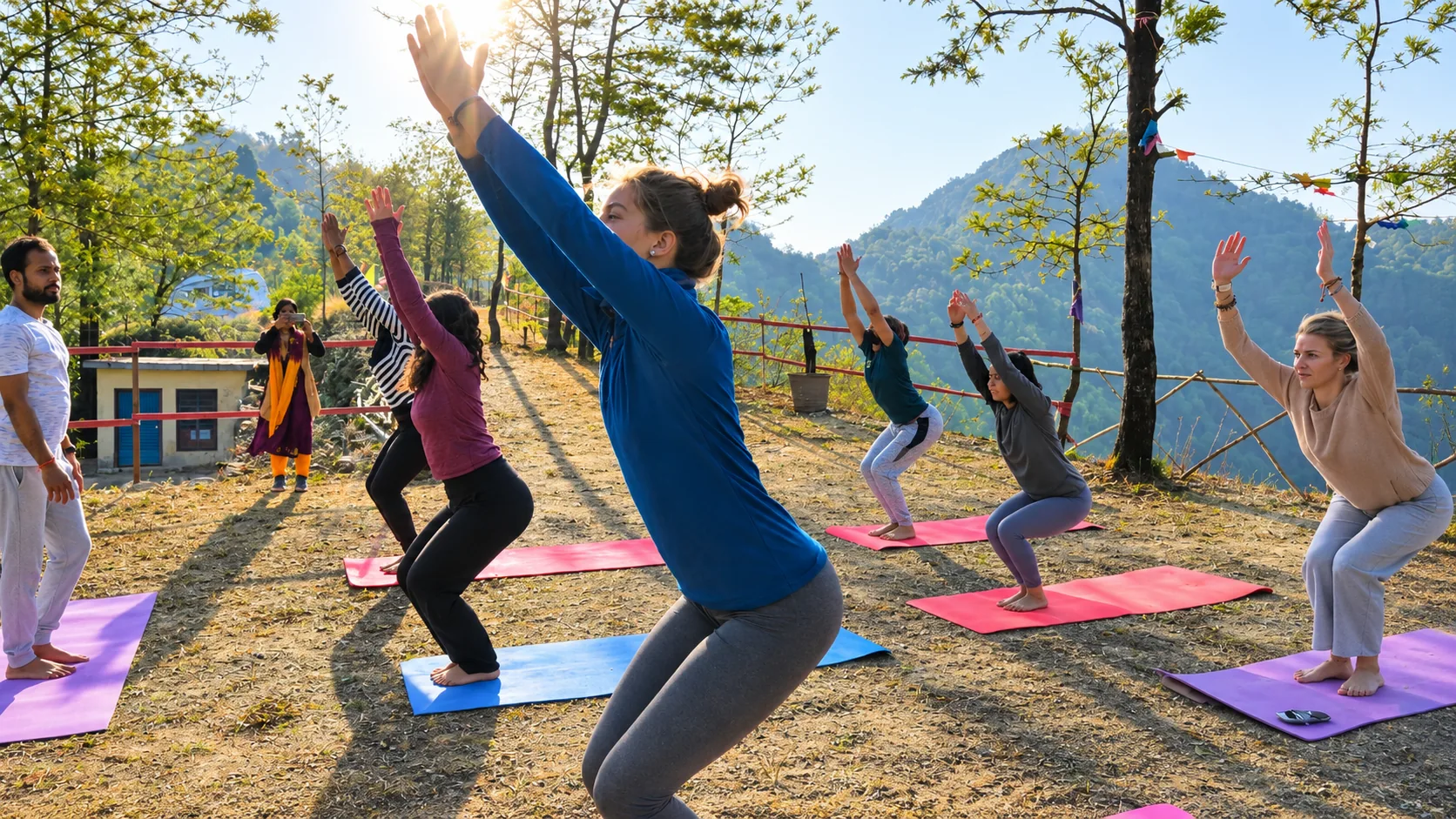
Step Onto The Mat Where Ancient Masters Walked
Upcoming residential cohorts at our Rishikesh campus are filling quickly. Connect directly with our admissions team to secure your dates and room preference.