



Daily Classical Yoga Nidra
A guided session of systematic relaxation every afternoon at 03:00 PM, balancing the day's active practice while you learn to guide it.
What Is Yoga Nidra?

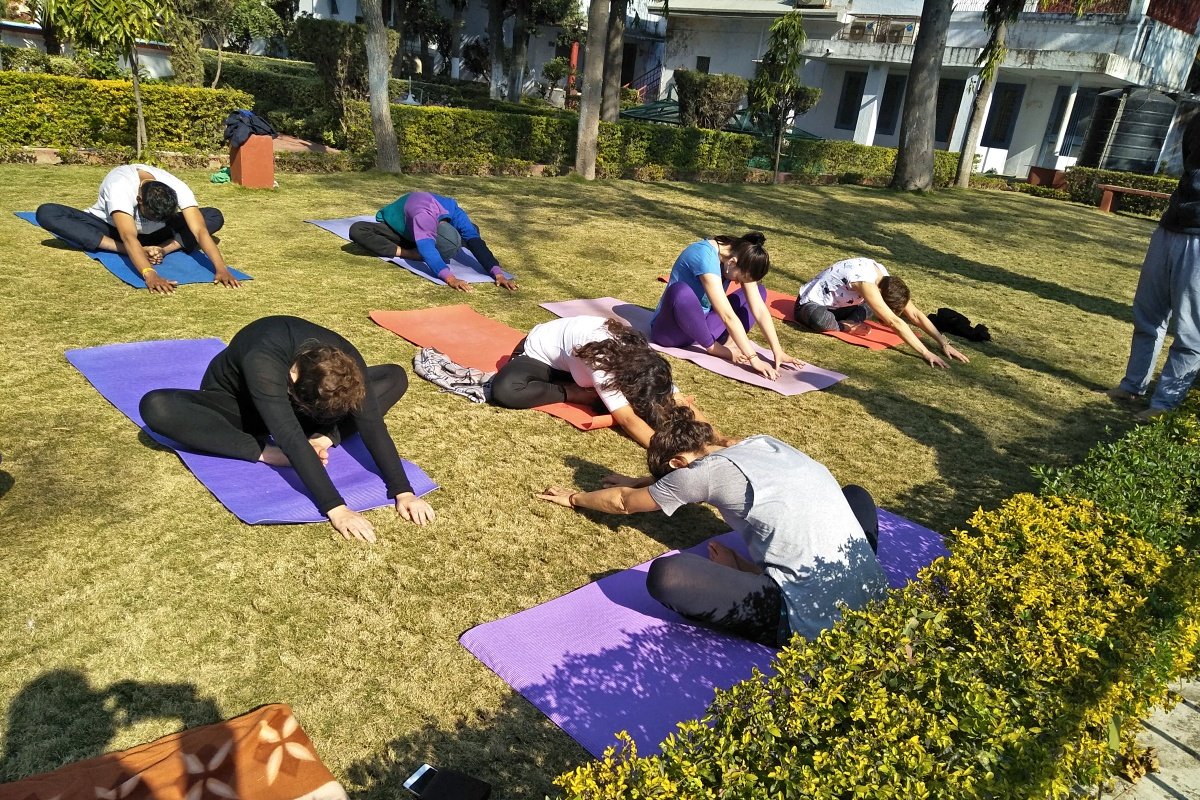
Often translated as “yogic sleep”, Yoga Nidra is a state between waking and sleeping in which the body rests deeply while awareness is maintained. A teacher's voice guides the practitioner through a sequence: settling, an intention (saṅkalpa), rotation of awareness through the body, breath awareness, sensations and visualization, then a gradual return.
Why Daily Yoga Nidra in an Intensive Training?
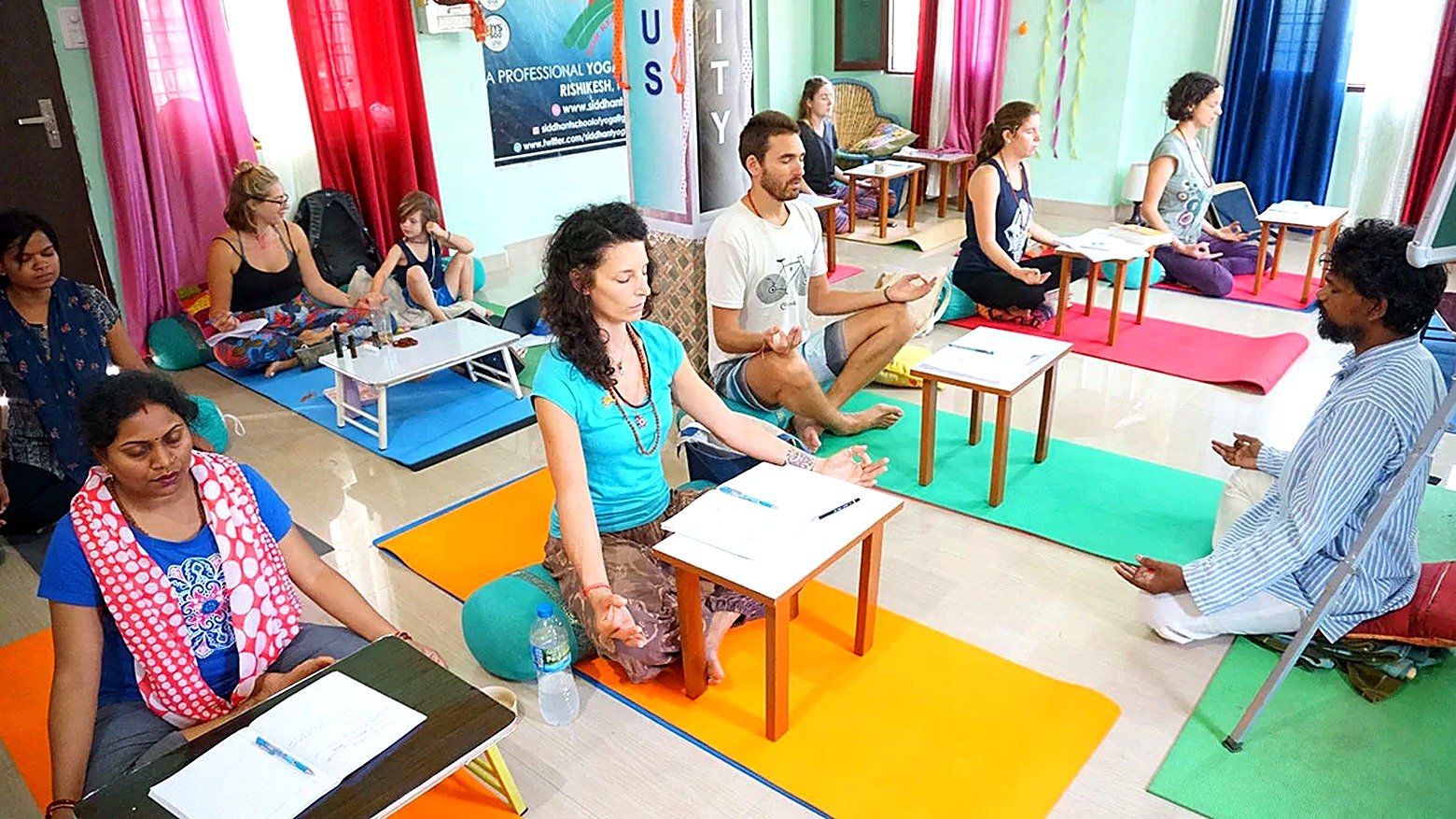
Residential training days are full. A daily session of systematic relaxation in the middle of the afternoon gives the body and mind a structured period of rest between morning and evening practice. It also gives students repeated first-hand experience of a practice they may later teach.
What You Practice and Learn
| Stage | What it involves |
|---|---|
| Body awareness | Rotating attention through the body part by part |
| Finding sensation | Observing physical sensations without reacting |
| Finding tension spots | Noticing where the body holds tension |
| Yoga Nidra level 1 | A complete guided practice from start to finish |
Body awareness
- What it involves:
- Rotating attention through the body part by part
Finding sensation
- What it involves:
- Observing physical sensations without reacting
Finding tension spots
- What it involves:
- Noticing where the body holds tension
Yoga Nidra level 1
- What it involves:
- A complete guided practice from start to finish
Relaxation Techniques in the Syllabus
Muscular relaxation
Releasing tension group by group through the body.
Deep breathing
Slow, conscious breathing to settle the system.
Tense-and-relax method
Contracting and releasing muscles to feel the difference.
Partial body relaxation
Focused relaxation of one region at a time.
Full body relaxation
A complete, systematic relaxation of the whole body.
Mind relaxation
Letting attention rest while staying gently aware.
In the 300-Hour TTC, Yoga Nidra continues through levels 1–4, alongside mindfulness, spine and prāṇa relaxation.
Learning to Guide Yoga Nidra
As future teachers, students learn how to structure a Yoga Nidra session, pace instructions, use the voice calmly and clearly, and prepare the room and students. This connects directly with Teaching Methodology and the Teaching Practicum.
What Yoga Nidra Is Not
Yoga Nidra is a relaxation and awareness practice. It is not a medical treatment or therapy, and we do not promise specific psychological or neurological effects. Students with a history of trauma or mental-health conditions are welcome to speak with teachers about how to approach the practice comfortably.
Frequently Asked Questions
What if I fall asleep?
It happens, especially at first. With repetition, most people find it easier to stay aware.
Do I need any experience?
No. Yoga Nidra is fully guided and suitable for beginners.
Will I learn to teach it?
Yes. Guiding Yoga Nidra and relaxation is part of the training.
When does Yoga Nidra take place?
Every afternoon at 03:00 PM during the residential training.
Rest deeply, stay aware, and learn to guide others into the same stillness.
Learn → Practice → Teach → Reflect. For Real Understanding.
Step Onto The Mat Where Ancient Masters Walked
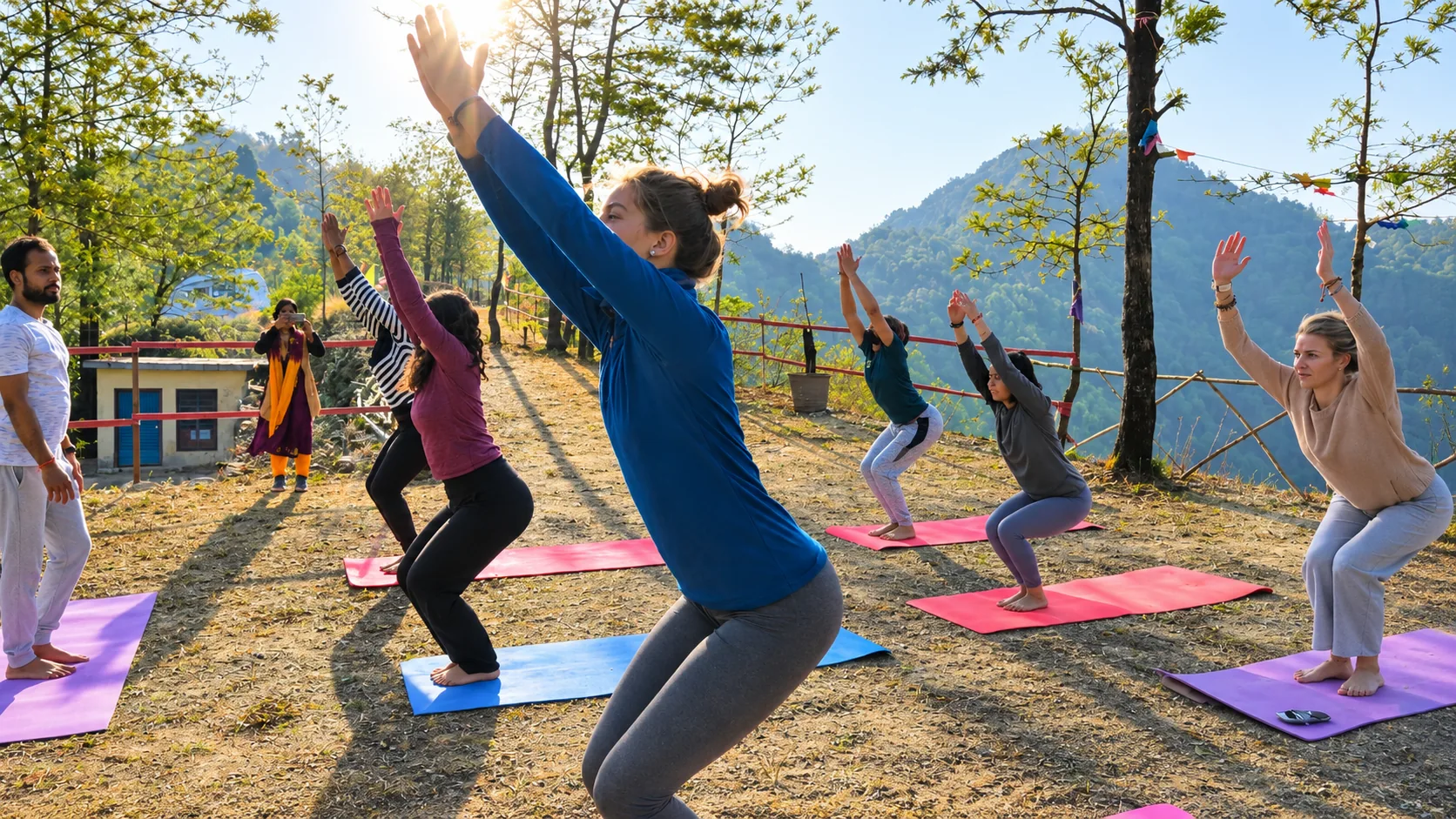
Upcoming residential cohorts at our Rishikesh campus are filling quickly. Connect directly with our admissions team to secure your dates and room preference.